The Wonderful World of David Oneal

AprilDecember

New Member
I don't think that 2008 settlement is actually a copyright case. The Justia docket summary lists the "character" case you mentioned as "Nature of Suit: Intellectual Property - Trademark" - which makes a lot more sense than pursuing a copyright infringement claim. "Character infringement" lawsuits involve Disney trademarks, which the company has been known to police more viciously because it IS easier and, according to trademark law, more immediately necessary to actively police company trademarks in order to maintain them. It almost always makes more practical sense to use trademark basis instead of or in addition to copyight arguments when it is available to you. Why open Pandora's Box if you don't have to? Disney knows this.

Further, the couple involved had built a rather official-looking, income-generating establishment around the use of these Disney trademarks, which is significantly different than a copyright-infringement instance where a bunch of hobbyists are sharing around personal videos, or even a person selling a video here or there at cost.

Anyway, I never said it was "okay" or even fair use to sell full copies of poor recordings on ebay, I was simply making the point that all infringements are not equal in the eyes of the federal court system. The fair use test illustrates that fact by balancing the real/potential effect on the market for the originals as well as the quality and character of the copy. :eek: I wrote: "Further, while each recording example that Horizons mentioned above is on some level an infringement, legal precedent DOES perceive a difference between the varying degrees of faithfulness of the copy - you can redistribute segments of reasonably short duration for certain purposes under the doctrine of fair use, for example."

Horizons said he didn't see much difference in the levels of infringement in distributing a self-shot attraction video, a low-quality ambient sound recording, and a high quality ALD recording. While he has an ethical point (especially when unjust enrichment is involved), I think that there is some difference when speaking in general terms. In fact, a poor recording - even if it is a "full" recording - logically has less of an impact on copyright holder enrichment than would a perfect, cd-quality copy (actually, much of the initial DMA folderol over online radio broadcasts centered on the quality issue - cd quality streams made the RIAA nervous, but lower quality streams were less of a concern because they weren't perfect substitutes for the audio product). In fact, in the Disney theme park audio collecting community, one of the more popular excuses I hear is, "it's not a perfect quality recording, so it's not really a substitute; if they release an official CD version, we will all want that and we will all buy it." And to a great extent, that's true.

Further, the more creative additions are made to the work, the stronger the transformative purpose of the derivative work, and thereby the stronger the potential cases for commentary, review, parody, &c. use become - certainly, taking a full show video and presenting it in a straightforward way will fail the "how much did you take" prong of the fair use test, but a video with significant additional content, unique presentation, and an academic or exceptionally silly approach could be considered "commentary" or "parody." Incidentally, it IS legally possible to make money off some "fair use" distributions - perhaps not likely in the particular cases you guys were discussing, but possible. In the cases of parody, even full songs can be used, which was the case when 2 Live Crew ganked "Pretty Woman" and inserted a rap and a few crude overlyrics.

I'm throwing out IP theory and general ideas here, because I see a LOT of conflation and misconceptions about copyright and trademark law when people get into discussions about Disney and their audio/video collections. While I agree with you that there are unethical and illegal things going on in the online community, what's "right" and what "isn't" aren't exactly as clear as some people would like to make them out to be.

And a caveat - I have a JD from UC Berkeley, but I'm not a practicing attorney. So NONE of this should be construed as "legal advice." Just ethical devil's advocacy for the purposes of discussion. :eek:
 

Magic Music

Administrator
Playlist Author
if I provide downloads of Disney theme park recordings on my website say, and Disney sees this, and decides not to take any action, that is effectively the end of it. No one else is going to come after me...

That's what you think! Remember that Disney is not necessarily the copyright holder. This is why the official albums haven't always had what the producers might have wanted them to have. There are lots of interested parties that can come after you. The American Federation of Musicians, for example, would not be happy to learn that you were selling unauthorized copies of their members' work.

When I raised a similar issue I was thinking of two different scenarios; (1) the Jeff Lange situation where he sells personal recordings that, to my knowledge, are not altered in any way (e.g., changing out the live audio for something else); and (2) the Martin Smith situation where he offers for no cost personal videos, with the audio enhanced a majority of the time.

My La Nouba exercise was meant to be an example of what you were referring to. I do not own the rights to La Nouba. Nothing that I do to a recording of the complete performance is going to make it okay for me to sell without Cirque du Soleil's permission. Likewise, no amount of reasoning will ever make it okay for Jeff Lange and Martin Smith to sell or distribute recordings of Disney's theme park attractions without Disney's consent.

I don't think that 2008 settlement is actually a copyright case. The Justia docket summary lists the "character" case you mentioned as "Nature of Suit: Intellectual Property - Trademark" - which makes a lot more sense than pursuing a copyright infringement claim.

I never said it was a copyright case. You mentioned that Disney may not be going after certain individuals because it doesn't make sense from a marketing or income standpoint. Others have mentioned that Disney may not want the bad press. This case, like the ones involving the daycare centers, is an example of something that appears to fly in the face of that line of reasoning. Clearly, "Disney Sues Couple On Public Assistance," is not a headline that Disney's P.R. people wanted to see.

A caveat: I do not have a medical degree — but I love to play doctor with the ladies. :eek:
 

Horizons

Playlist Author
Likewise, no amount of reasoning will ever make it okay for Jeff Lange and Martin Smith to sell sell or distribute recordings of Disney's theme park attractions without Disney's consent.

Just to be clear, to my knowledge, Martin Smith has never sold his recordings. Rather, he distributes his work to anyone who is interested in obtaining a copy (for no cost). Do you think this practice could also be at risk?

EDIT: I read your post again and you did say it would not be okay to sell or distribute personal recordings, a nuance I missed the first time I read it.
 

AprilDecember

New Member
My question is, if Disney decides not to take any action for a significant period of time, couldn't this in a de facto way be viewed as Disney authorizing that use?

In a nutshell, no.

Could they avoid doing anything for 5 years say and then decide to sue?

Yes.

This is correct in terms of copyright; not so much in terms of trademark. This is why Disney frequently snipes at tricircle mickey representations and character usage - sometimes even when nobody's making money from the use (isn't that what happened with the RADP pins?) - but seem to tolerate the audio torrent thing. Trademark law requires you to actively police your trademark to avoid dilution.

I think you're missing the point, Jay. I think in this scenario, those facts would make a different not to the extent that you would not still be infringing on their copyright but that you did change the show in some way and thereby create a form of derivative work- someone buying your DVD would get something (whether they like it or not) that they would not get if they bought the official DVD (and the fact that they do sell one would make proving damages a lot easier on their part), and so arguably the value of damages caused by you is lessened.

I'm not following this. When I raised a similar issue I was thinking of two different scenarios; (1) the Jeff Lange situation where he sells personal recordings that, to my knowledge, are not altered in any way (e.g., changing out the live audio for something else); and (2) the Martin Smith situation where he offers for no cost personal videos, with the audio enhanced a majority of the time.

I didn't know exactly which scenerios you were pointing to; I jumped on the different theoretical levels of copy quality that you presented later on.

I should say that technically, you can't really make full use of your "copyright bundle of sticks" regarding your derivative work unless you have the legal right to use the original (via permission or fair use)...but on the other hand, the original copyright holder can't make use of your derivative work just because they own the poached work, either (which is something I've seen a lot of people claim - bogus bogus bogus). Crazy conundrum. At any rate, my point was that you don't necessarily have the right to do as you please just because you added significantly to the original work, but that what you DO add, in conjunction with other factors involved, makes it tougher to fairly and equitably calculate how much you cost/might cost the copyright holder with your illegal copies. As illustrated by those crazy maximum statutory damages penalties assessed PER SONG in the peer-to-peer file distribution lawsuits, damages aren't always fair or equitable, but in theory the courts are supposed to take into consideration reasonable if not actual market effect AS WELL AS the intentions of the infringers when they make a decision (like, the "are you a good or bad infringer?" prong of the fair use test).

To make a good analysis of the potential infringements in both Jeff L's and Martin's pieces, we'd have to take them on a video by video basis. Depending on the components of the "show" at issue in each, a full ride video of say, the omnibus on Main Street wouldn't likely create much of a copyright violation even if sold at a profit, as it's basically just several minutes of real life photographed in a quasipublic place. This is particularly true if you can't really make out the area music in the background. The balance might shift if you added kick-butt quality Main Street area loop audio of significant length to the soundtrack, though. Presence of choreographies, films, and music in an attraction video involve potentially copyrighted material (if it's public domain, it's not protected), which muddles the waters significantly. The large amounts of unique and original content provided in Martin's videos coupled with the fact that he doesn't charge any money for them kinda morally negates the fact that his videos include "good" or even "full" copies of protected recordings or show elements. Further, his "products" aren't a replacement for the original Disney works at issue. I think this is why Disney tolerates and even kinda almost encourages his work. Some of his videos might technically fail the "how much?" prong of the fair use test, but it would make little practical sense for them to get all upons over it.

This is why they haven't...so far.
 

Magic Music

Administrator
Playlist Author
Just to be clear, to my knowledge, Martin Smith has never sold his recordings. Rather, he distributes his work to anyone who is interested in obtaining a copy (for no cost). Do you think this practice could also be at risk?

Yes, I do. I think there is a huge difference between Uncle Albert offering to make a copy of his camcorder recording of the Monsters Inc. Laugh Floor for his five-year-old niece, and someone who edits/enhances video footage of the attraction from multiple camera angles, using professional editing software, and then posts it to a website where it can potentially be downloaded by tens/hundreds of thousands or more.

Should Disney decide to sell their own MILF video, how many sales will have been lost to persons who already downloaded the free version?

I don't see how the "free" or "charity" angle makes a difference. Something tells me that if I printed up 10,000 Star Trek posters, and I stood in front of the AMC Pleasure Island 24 tonight, giving them away for free, that I could still find myself in a load of hot water with Paramount.
 

AprilDecember

New Member
I don't think that 2008 settlement is actually a copyright case. The Justia docket summary lists the "character" case you mentioned as "Nature of Suit: Intellectual Property - Trademark" - which makes a lot more sense than pursuing a copyright infringement claim.

I never said it was a copyright case. You mentioned that Disney may not be going after certain individuals because it doesn't make sense from a marketing or income standpoint. Others have mentioned that Disney may not want the bad press. This case, like the ones involving the daycare centers, is an example of something that appears to fly in the face of that line of reasoning. Clearly, "Disney Sues Couple On Public Assistance," is not a headline that Disney's P.R. people wanted to see.

A caveat: I do not have a medical degree — but I love to play doctor with the ladies. :eek:

Behave. :eek:

No, it doesn't fly in the face of that reasoning, because the case you cited is a TRADEMARK case - trademark law has different policing requirements than copyright law. Disney MUST police its trademarks even in cases of little or no unjust enrichment, because protecting your mark from dilution is a REQUIREMENT if you intend to maintain ownership over your trademark. Copyright requirements are different and less stringent in this regard. So, no immediate necessity to spend money and create ill will if the infringement is at present insignificant (or even indirectly lucrative).
 

Magic Music

Administrator
Playlist Author
This is why Disney frequently snipes at tricircle mickey representations and character usage - sometimes even when nobody's making money from the use (isn't that what happened with the RADP pins?) - but seem to tolerate the audio torrent thing. Trademark law requires you to actively police your trademark to avoid dilution.

Hmmm. What's this that I see on the audio/video torrent website?

gallery_321_12_6183.png


Disney MUST police its trademarks even in cases of little or no unjust enrichment, because protecting your mark from dilution is a REQUIREMENT if you intend to maintain ownership over your trademark.

Holy crap! They better get busy! I can point to hundreds of websites that have Disney-trademarked elements in their logos, banners, etc. Someone at Disney Legal is fast asleep.
 

eyore

DLRP explorer
Playlist Author
Remember we are actually discussing two things here.
The plain simple(!) copyright laws and the likelihood of enforcement.

Do Martin's videos breach copyright. Yes. There's certainly music on them which belongs to someone (just because it's altered doesn't change the ownership). Possibly public performances of a parade may also be copyright (as much as a stage show, anyway - they do charge to get into the park so what's the difference to any open air show?).

Are Disney likely to enforce?
Probably not IF no money is charged because they do actually provide free publicity. The same could be said for sites like Rodentsections and the use wouldn't damage their reputation (in other words, if they get more out of it than they lose).
The quality would also be taken into account - disney don't want to look cheap and cr*p, after all.
Are such sites breaking copyright law. Most decidedly yes.
Oh, by the way, in the UK, it breaks the law to copy any CD - say to make a backup copy or a copy to play in the car. They are working on changing that as it's one of the few countries left that hasn't followed the trend.
As regards the trademarks. Use of anything could be deemed as "approved by" so Disney has to step in to prevent the public making the assumption that it's approved by them.
There have been cases where copyright stuff has been used and not acted on (eg a cease and desist order) and, eventually, copyright has been lost but they are rare and, as mentioned, it has to be proved that the copyright holder knew (or should have known) of the use and did nothing.
That could, however, only result in that particular owner being deemed to have consent - not everyone else.
Passing into public domain through neglect of action is very, very rare indeed.
This doesn't alter the laws, only whether they choose to enforce it or not.
At the end of the day, it's their decision, isn't it?
 

AprilDecember

New Member
This is why Disney frequently snipes at tricircle mickey representations and character usage - sometimes even when nobody's making money from the use (isn't that what happened with the RADP pins?) - but seem to tolerate the audio torrent thing. Trademark law requires you to actively police your trademark to avoid dilution.

Hmmm. What's this that I see on the audio/video torrent website?

gallery_321_12_6183.png


Disney MUST police its trademarks even in cases of little or no unjust enrichment, because protecting your mark from dilution is a REQUIREMENT if you intend to maintain ownership over your trademark.

Holy crap! They better get busy! I can point to hundreds of websites that have Disney-trademarked elements in their logos, banners, etc. Someone at Disney Legal is fast asleep.

What, the welfare couple aren't enough for you this year? :eek:

Seriously, though...you never know who's going to be made the next "example." It'll usually be a for-profit venture, but it doesn't have to be.
 

AprilDecember

New Member
Remember we are actually discussing two things here.
The plain simple(!) copyright laws and the likelihood of enforcement.
...
At the end of the day, it's their decision, isn't it?

Absolutely. But you can't underestimate the fact that "the law" is a double-edged sword for plaintiffs, as courts interpret the law on a case-by-case basis and the interpretations made can alter the rules of the game significantly and quickly.
 

eyore

DLRP explorer
Playlist Author
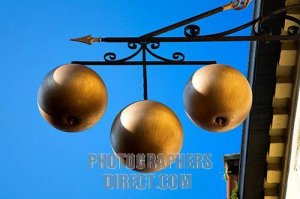
As far as the three circles representing MM, didn't the Medici use that symbol which is now the sign used for for a pawnbroker?
Disney better watch out :eek:
I think, to be fair, the MM logo is specific as to size of head to ears ratio etc (hence all the arguments over hidden Mickeys)

?0? or ?O?

8:)-)

Oops, gotta go into hiding now character_46.gif
 

Magic Music

Administrator
Playlist Author
As far as the three circles representing MM, didn't the Medici use that symbol which is now the sign used for for a pawnbroker?

The Medici family started out with a three-sphere crest but later switched to five spheres. Whether three or five spheres, they are equal-sized, and are not connected to one another. I don't think they could be mistaken for "Mickey" or vice versa.

91px-Coat_of_Arms_of_Medici.svg.png
 

eyore

DLRP explorer
Playlist Author
Quite right.
The use of only three of the balls was based mainly on the problems of making a sign with them all on. Three being the least to still represent the coat of arms.

pd2275627.jpg

The medicis never had a three-ball crest. The original crest had eight but the "official one (registered in 1465) had six but that was dropped to five when the King (Louis Xl) gave permission for his sign to be added - sort of "by appointment".
Still, the pawnbroker's sign has three and, of course, the olympic logo is most decidedly two Mickeys sharing one ear.

olympsym.gif

No idea how these attachments are going to appear, not used to doing them :eek:
 

Magic Music

Administrator
Playlist Author
The medicis never had a three-ball crest. The original crest had eight...
I've read articles claiming three and twelve as the original number of spheres. Over the years there were apparently twelve, eight, seven, six, five, and three. I guess all we know for certain is that the family had a lot of balls! :eek:

Palle! Palle! Palle!

From Wilsonart's Pictorial Symbols page:


misc.gif


Pawn Shop by Rudolph Modley for the Pictorial Corporation of New York

This image of three suspended balls in a circle is a crest, which dates back to Renaissance Florence Italy where the Medici family rose as the wealthy commerce class. The original Medici crest was three spheres and later evolved into a five sphere crest. The Medicis were also pawnbrokers, offering citizens loans for collateral goods, and the crest marked their shop. Although the Medicis are gone, the tradition still holds and three or five-sphered crest still marks pawnshops.


Santa with a three-sphere Medici crest:
santa_arms.gif

The Medici family also used three interlocking diamond rings as a symbol:

florence4.jpg


But...

What does all this have to do with Extinct Attractions being extinct? :eek:
 

eyore

DLRP explorer
Playlist Author
Maybe Disney pawned the videos, didn't redeem them in time and a Mr Oneal took them on and now they want them back :eek:

There we are, back on topic again. :eek:
 

Club 33

Playlist Author
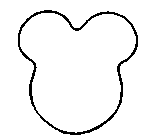
The Walt Disney Company has trademarked "the configuration of of a round head with round ears attached," saying as such that any reproduction of said mark "falsely implies endorsement or sponsorship," "is likely to cause public confusion," and "constitutes unfair competition" (excerpted from Mouse Under Glass by David Koenig).

Registration Number 1760110 (you can search the trademark office website to find the filing).
 

almandot

Member
The Walt Disney Company has trademarked "the configuration of of a round head with round ears attached," saying as such that any reproduction of said mark "falsely implies endorsement or sponsorship," "is likely to cause public confusion," and "constitutes unfair competition" (excerpted from Mouse Under Glass by David Koenig).

Registration Number 1760110 (you can search the trademark office website to find the filing).

.o o.
..O.. < huhuh! oooooh boy! my ears look SWELL when they're not technically attached. aaaand how!
 

Magic Music

Administrator
Playlist Author
Registration Number 1760110

That particular registration was for foods, and is DEAD/CANCELLED, so perhaps it is okay for almandot to attach his ears to his head — especially if they're not edible. :eek:

Ears.gif

Goods and Services (CANCELLED) IC 030. US 046. G & S: [staple foods; namely, breakfast cereal, candy [ and corn chips ]]. FIRST USE: 19890200. FIRST USE IN COMMERCE: 19890200
Mark Drawing Code (2) DESIGN ONLY
Design Search Code 26.01.28 - Circles with irregular circumferences; Miscellaneous circular designs with an irregular circumference
Serial Number 74214212
Filing Date October 21, 1991
Current Filing Basis 1A
Original Filing Basis 1A
Published for Opposition December 29, 1992
Registration Number 1760110
Registration Date March 23, 1993
Owner (REGISTRANT) WALT DISNEY COMPANY, THE CORPORATION DELAWARE 500 South Buena Vista Street Burbank CALIFORNIA 91521
Assignment Recorded ASSIGNMENT RECORDED
Attorney of Record MEI-LAN STARK
Description of Mark The mark consists of the confiquration of a round head with round mouse ears attached.
Type of Mark TRADEMARK
Register PRINCIPAL-2(F)
Affidavit Text SECT 15. SECT 8 (6-YR).
Live/Dead Indicator DEAD
Cancellation Date December 27, 2003

http://www.uspto.gov/main/trademarks.htm
 

eyore

DLRP explorer
Playlist Author
Ha!
I recognize that shape.
There's a food range that come in plastic trays of that shape (spaghetti and stuff like that) and also pizzas for kids - which we do actually buy and they do bear the Disney name etc.
I wonder if that trademark registration has been superseded by another one.
If not, I'm going into the MM pizza business :eek:
I also note that the Rodentsections logo doesn't have the ears attached but in front of the larger circle.
That could be an interesting one :eek:
 
Top