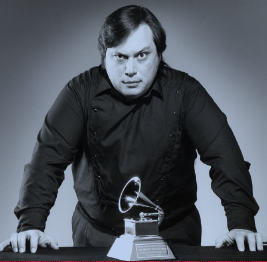
The Wonderful World of David Oneal

Gurgitoy2

Active Member
Hmm..."Theme Parks 360" there's a new angle...don't mention Disney at all!

I checked google for that title and came up with his other site.

http://www.themeparks360.tv/

Looks like a series of "behind the scenes" info on theme parks...kind of generic now, huh? I can tell it's Dave's production, because it looks the same as his promo videos for extinct attractions. I'll be curious to see where this site goes...

Oh, and here's the blog replacement:

http://themeparks360.blogspot.com/2008/10/...-parks-360.html
 

eyore

DLRP explorer
Playlist Author
Did you notice the date on the single entry on the blogspot. October 2008.
A prepared bolthole maybe?
Or perhaps "nipped in the bud"?
Of course, I don't know when those sites opened.
We'll have to wait and see.
How does that old saying about a bad penny go? :p
 

stevek

Member
I can pretty much guarantee that theme park 360 is Dave/EAC. Just yesterday I got a "Theme Parks wants to keep up with you on twitter". Came to both my home and work e-mails and EAC was the only site where I registered with both e-mail addresses...yes, I did purchase EAC DVD's way back when they started the service. Stopped when I found out they were thiefs.
 

Magic Music

Administrator
Playlist Author
I can pretty much guarantee that theme park 360 is Dave/EAC.

I can do better than that. The Theme Parks 360 website says it is "Copyright 2009 Pop Culture Entertainment LLC" and it redirects to popcultureentertainment.com when you click on 'Contact.' (You gotta love a guy, by the way, who copyrights his own stuff, but has no respect for the copyrights of others. :p )

Network Solutions > Whois > Results

popcultureentertainment.com

Registrant:
dave oneal
3943 irvine blvd #157
irvine, California 92602
United States

Registered through: GoDaddy.com, Inc. (http://www.godaddy.com)
Domain Name: POPCULTUREENTERTAINMENT.COM
Created on: 21-Jun-08
Expires on: 22-Jun-09
Last Updated on: 23-Jun-08

Administrative Contact:
oneal, dave oldthemeparks@aol.com
3943 irvine blvd #157
irvine, California 92602
United States
(949) 533-2684

Technical Contact:
oneal, dave oldthemeparks@aol.com
3943 irvine blvd #157
irvine, California 92602
United States
(949) 533-2684

Domain servers in listed order:
NS1.DREAMHOST.COM
NS2.DREAMHOST.COM

Current Registrar: GODADDY.COM, INC.
IP Address: 208.97.191.159 (ARIN & RIPE IP search)
IP Location: US(UNITED STATES)-CALIFORNIA-BREA
Lock Status: clientDeleteProhibited
DMOZ: no listings
Y! Directory: see listings
Data as of: 23-Apr-2008
 

almandot

Member
I can do better than that. When you email the address listed asking why EAC is down for reconstruction Dave replies back that he's opening up theme parks 360.

/wasn't that hard
//
 

stevek

Member
Will be interesting to see if his DVD store shows up there or somewhere else on the net. According to the Window to the Magic forum, it's just a name change as of now. I find it very interesting and a little disturbing that the video preview appears to have in-park interviews with Disney personnel yet this yay-hoo continues to steal from Disney.
 

almandot

Member
Their site seems to have changed today, still listing the old name. Unfortunately, they do not seem to be extinct after all.

His demo video seems to combine official disney footage with a small bit of footage he shot while on the job for disney a while back and then some stuff with this new host character.

The king kong thing he added seems entirely a product of his friendship with Bob Gurr and getting interviews recorded about everything the guy's worked on in his life. He apparently teamed up with the guy who created thestudiotour.com (seen in an interview in the king kong sample) and it looks like one of his more "legal" productions, using home footage/pictures and selfmade interviews. He still doesn't have the authority to use the copyright I'm sure but nonetheless.
 

SeaCastle

Playlist Author
I find it extremely ironic that the website for Hackked (also by Pop Culture Entertainment) has a description that states: "Hackked exposes average people to the myriad of ways their lives can be disrupted by those who misuse technology." He forgot to add that he sold fellow fans' audio and video recordings for free, not to mention stealing copyrighted Disney content and selling it. I'm pretty sure that has disrupted a few lives along the way.
 

eyore

DLRP explorer
Playlist Author
If he wants to use his own stuff (without stolen footage), that's fine.
Hopefully his rip-offs have ceased.
I can't find any "genuine" outlets selling his Disney stuff anywhere.
Interestingly, abovethefirehouse seems to have gone as well.
Are Disney having a purge?
 
This is tragic. Where is BILL when we need him. Oh, the posts he would be making over all of this. I am so surprised this isn't being made a big deal of. I would love to know what's going on for real. I do know Dave had been planning this new 360 thing for a while, but not as a replacement for EAC. Love to find out which straw broke the camels back!
 

AprilDecember

New Member
No, you do not. Can you get away with selling such a painting at a local arts & crafts show? Very easily. I've seen hideously rendered Mickey Mouse and Bart Simpson lawn ornaments at craft shows. Do these people have a right to sell them? Absolutely not.

The NOS painting scenario brings up an interesting question. Some of the structures in NOS were patterned directly after specific French Quarter buildings in real New Orleans. The facade with the hanging baskets is almost an exact replica of a French Quarter building I've photographed. Could Disney be in some copyright trouble for that?

I mean, I can photograph these buildings and sell my pics, but I can't photograph or paint a pic of their knock-offs in DL and sell them?

Copyright protection is extended to architectural plans and, to a limited extent, structures themselves, but if visible from a public or quasi-public space, you can't prevent people from taking, making, displaying, or distributing pictorial depictions of the work (17 U.S.C. - 120(a)). Further, and regarding the point about Disney potentially infringing upon someone else's IP rights, there is the fact that very old historical structures are a) usually well beyond the legal timespan of copyright and B) often themselves pastiches of older, traditional, public-domain design elements. From a copyright standpoint, Disney's NOLSq is a unique series of derivative works based on public-domain structures; this doesn't mean that someone else can copy the Disneyfied facade layout in their own structures without infringement, but I don't think it means that you can't freely distribute your own photographs of the area, on general principle. After all, you're not reproducing the architecture in structural form, you're sharing pictures.

Now, people have made successful arguments for TRADEMARK protection of certain structures (like the Chrysler Building in NYC) - that protection theoretically extends to the distribution of images depicting the building and its architectural elements, but trademark protection ONLY applies to extremely unique, distinctive structures and design elements which are specifically attributable to and irrefutably linked to the business entity seeking the trademark protection (think Sleeping Beauty Castle, or the silver triangles from the aforementioned Chrysler Building). Further, the general understanding is that the value of having trademark ownership lies in the extent that it actually identifies the owner's brand. I don't see how the city of NOLA or most of the structure owners in the Vieux Carre would even be able to illustrate an inextricable link between a particular facade and their unique brand identities. Further, I'm not sure who, exactly, would benefit from attempting to establish the Vieux Carre or its component buildings as protectable trademarks - in actuality, the city and its various businesses benefit from the free dissemination of images of its beautiful old structures. I mean, is "New Orleans" really a "brand"? And if it is, what's the value of restricting images that actually encourage excitement and tourism? And beyond that, it seems even more difficult to be able to make a case for a Disney trademark in the facades of New Orleans Square, taken generally. On the other hand, structures like Sleeping Beauty Castle and CInderella Castle change things up - Not only are these structures used as corporate logos, they are inextricably linked with the Disney brand. And even though these structures are based on original architiectural elements which are generally considered in the public domain, they are unique and identifiable enough to create an unmistakable mental link between them and the Disney Corporation.

Intellectual property law is kind of a confusing beast - on one side, we have specific statutes (the United States Code) that indicate in a relatively basic way what copyrights and trademark ownership encompass, and on the other we have judge-made, case decision-driven precedents which are continually reinterpreting what the statutes actually mean when applied to real-life facts and circumstances. As a result, what's legal/illegal/right/wrong/actionable/not actionable is a lot more fluid and up to debate than we may realize - what is controlling precedent today could change markedly tomorrow. Further, what makes logical legal sense may not always serve the interests of the actual intellectual property owners at any given time; for example, Disney very likely views the sharing of noncommercially available theme park audio as useful marketing, so they don't bother policing it much (for the time being, anyway). While you don't have to lose money to prove infringement, money is a big consideration in the decision to police one's copyrights.

Further, it's important not to read too much into the ways that licensees and "fair users" and would-be infringers utlilize and present Disney's intellectual property - just because someone puts a big copyright or trademark symbol next to a Disney credit, it doesn't automatically make the usage legal...similarly, it doesn't mean that the usage is necessarily illegal just because Disney didn't give direct permission. Often, both IP owners and users (legal and otherwise) say, do, and claim certain things for CYA reasons, not for the purposes of satisfying specific or genuine legal requirements. It really is a game of posing, until someone gets up the rocks to actually file a lawsuit (and lawsuits have a habit of becoming expensive Pandora's Boxes, so IP owners are careful to choose their battles wisely).

It's also important to note that copyright law, trademark/servicemark law, and patent law are three very different branches of IP. Each bundle of intellectual property ownership rights addresses different public policy goals and different types of intellectual property, which means that the rights involved and the terms of enforcement will vary considerably. In some cases, one branch may "fill in the cracks" of intellectual property protection left by one or both of the others - for example, a cartoon's copyright term will expire eventually, but a cartoon character featured in the same cartoon may be protected in perpetuity, potentially, as a company trademark, thereby barring the free use of the cartoon in question even though copyright grounds for protection no longer apply.

Additionally, even within one branch of IP law, the rules apply slightly differently depending on the type of intellectual property you're dealing with. In all cases, in order to have a "copyright" in a work, the work must be an "original work of authorship" that is fixed in tangible medium (you can't copyright ideas) and is not in and of itself a "useful article." One significant exception to the "useful article" rule is the wonderful world of boat hulls, which was specifically legislated at the behest of boat hull designers - they felt their hard design work was being unfairly poached by copycats, but they couldn't demonstrate copyright ownership because they were barred by the "useful article" issue, and they couldn't reconcile their products with the requirements of patent law. Some elements of the fashion design industry are lobbying for copyright protection for clothing designs, which are currently not eligible for protection as clothing are deemed "useful articles." Fabric prints, however, as they are functionally separatable from garment design, and jewelry designs are protectable as they understood to exist independently from the utilitarian items they often accompany.

Are you talking about self-made recordings? I was talking about the sale of home-made video recordings. If someone sold home-made audio recordings it would fall into the same category.

Do you see a difference if I sold (1) a video recording of Country Bear Jamboree, (2) an ALD recording of the Country Bear Jamboree soundtrack, or (3) a video recording of the Country Bear Jamboree with the ALD recording synched to the video?

I don't see a difference between selling any of the three. I'm curious how others feel.

At best, they're derivative works of copyrighted material (most specifically, the videos, which presumably incorporate some modicum of new creativity via editing, &c...which creates a conundrum for the creator of the derivative work) - the show as a whole may not be considered a "copyrightable work," but various elements will be (like the audio, any films incorporated within the show, &c.). According to the Copyright Act, some of the exclusive rights granted to copyright holders include:

"To reproduce the copyrighted work in copies or phonorecords;

To prepare derivative works based upon the copyrighted work;

To distribute copies or phonorecords of the copyrighted work to the public by sale or
other transfer of ownership, or by rental, lease, or lending;

*To perform the copyrighted work publicly, in the case of literary, musical, dramatic,
and choreographic works, pantomimes, and motion pictures and other audiovisual works;

*To display the copyrighted work publicly, in the case of literary, musical, dramatic,
and choreographic works, pantomimes, and pictorial, graphic, or sculptural works, including
the individual images of a motion picture or other audiovisual work; and

*In the case of sound recordings, to perform the work publicly by means of a digital
audio transmission."

(Quoted from the American Bar Association website)

I think what prevents Disney from taking action is the fact that others have mentioned, and I discussed above - it doesn't make sense from a marketing or income standpoint at this juncture. Further, while each recording example that Horizons mentioned above is on some level an infringement, legal precedent DOES perceive a difference between the varying degrees of faithfulness of the copy - you can redistribute segments of reasonably short duration for certain purposes under the doctrine of fair use, for example. Further, poor copies and the addition of new, creative content may lessen the damages calculated as a result of the infringement....

According to the summary provided at http://fairuse.stanford.edu/Copyright_and_...apter9/9-b.html, the amount of trouble in which you can expect to find yourself depends on the following:

1. the purpose and character of your use (did you gank a perfect, faithful copy, or did you add something meaningful in your usage?)
2. the nature of the copyrighted work
3. the amount and substantiality of the portion taken, and
4. the effect of the use upon the potential market.

 

Magic Music

Administrator
Playlist Author
Further, while each recording example that Horizons mentioned above is on some level an infringement, legal precedent DOES perceive a difference between the varying degrees of faithfulness of the copy - you can redistribute segments of reasonably short duration for certain purposes under the doctrine of fair use, for example.

We're not talking about a "segment of reasonably short duration," we're talking about reproducing the whole bloody thing from start to finish. Reproducing an entire show (e.g., Country Bear Jamboree), with the intent to profit directly from that show, does not fall under fair use.

Further, poor copies and the addition of new, creative content may lessen the damages calculated as a result of the infringement.

I am off to Downtown Disney's West Side where I intend to videotape La Nouba. I am sure I won't be entirely happy with the sound quality coming from my camcorder's tiny built-in microphone so, when I get home, I am going to carefully mix in audio from the La Nouba soundtrack. Also, while the show is awesome, I feel it could be a bit longer. I am going to videotape myself standing on my head in my living room and add it to the final production.

How long do you expect I will be able to sell my DVDs on eBay and elsewhere before I hear from Cirque du Soleil's attorneys?

I think what prevents Disney from taking action is the fact that others have mentioned, and I discussed above - it doesn't make sense from a marketing or income standpoint at this juncture.

Disney Sues Couple On Public Assistance

ORLANDO, Fla., July 10, 2008 (UPI) -- Disney Enterprises Inc. has filed a million-dollar copyright-infringement suit against a Florida couple who receive public assistance, court papers show. The suit filed in a federal court in Orlando, Fla., claims David Chaveco and Marisol Perez-Chaveco used "unauthorized reproductions" of Disney characters for their party entertainment company Kook Klown Party People, Inc., the Sentinel reported Thursday.

The company rents bounce-houses and specializes in custom-baked cakes and face painting, the Sentinel reported.

The entertainment also includes dressed up characters, using costumes the couple purchased on eBay.

One of the costumes is a blue donkey. Another is an orange tiger. Disney claims the two costumes are reproductions of Disney-owned characters Eeyore and Tigger.

The couple said they have done what Disney has asked, except for giving them the costumes to destroy. Instead, the couple sent the costumes back to the seller for a refund, because, "we needed the money," Perez-Chaveco said.

Disney officials declined comment, the Sentinel reported.

On the Net:

Justia: Disney Enterprises, Inc. v. Kool Klown Party People, Inc. et al
 

eyore

DLRP explorer
Playlist Author
Never seems to make sense does it.
I know of a single ice cream seller who had a painting of MM on his van (his only van) being forced to remove it.
Maybe they thought it would harm them so badly should a child in the UK get a bad tummy after eating an ice cream seemingly endorsed by Mickey :eek:
Sell entire films, they think about it for a few years and do nothing.

Who said the world was sane.

"Ours not to reason why".
 

Club 33

Playlist Author
This is turning into quite a discussion! Thanks AprilDecember for that excellent summary.

Here's a question: as previously mentioned, much of how copyright law is actually enforced depends on what action (or lack thereof) the IP holder decides to take. For example, if I provide downloads of Disney theme park recordings on my website say, and Disney sees this, and decides not to take any action, that is effectively the end of it. No one else is going to come after me (of course this is a whole different ball game in other areas such as music and film where you have the RIAA and MPAA).

My question is, if Disney decides not to take any action for a significant period of time, couldn't this in a de facto way be viewed as Disney authorizing that use? I believe in trademark law trademark holders have to actively enforce their trademark, which is why these days you see a little ™ or ® on damned near everything. If Disney intentionally refrains from trying to stop me using their IP in a particular way, could it not be said that they are in effect silently authorizing it? Could they avoid doing anything for 5 years say and then decide to sue? This does, I suppose, hang on the fact that you would have to prove Disney intentionally refrained from acting as such, and that there was no change on your part that would suddenly spur them to act.

I am off to Downtown Disney's West Side where I intend to videotape La Nouba. I am sure I won't be entirely happy with the sound quality coming from my camcorder's tiny built-in microphone so, when I get home, I am going to carefully mix in audio from the La Nouba soundtrack. Also, while the show is awesome, I feel it could be a bit longer. I am going to videotape myself standing on my head in my living room and add it to the final production.

I think you're missing the point, Jay. I think in this scenario, those facts would make a different not to the extent that you would not still be infringing on their copyright but that you did change the show in some way and thereby create a form of derivative work- someone buying your DVD would get something (whether they like it or not) that they would not get if they bought the official DVD (and the fact that they do sell one would make proving damages a lot easier on their part), and so arguably the value of damages caused by you is lessened.
 

Horizons

Playlist Author
My question is, if Disney decides not to take any action for a significant period of time, couldn't this in a de facto way be viewed as Disney authorizing that use?

In a nutshell, no.

Could they avoid doing anything for 5 years say and then decide to sue?

Yes.

I think you're missing the point, Jay. I think in this scenario, those facts would make a different not to the extent that you would not still be infringing on their copyright but that you did change the show in some way and thereby create a form of derivative work- someone buying your DVD would get something (whether they like it or not) that they would not get if they bought the official DVD (and the fact that they do sell one would make proving damages a lot easier on their part), and so arguably the value of damages caused by you is lessened.

I'm not following this. When I raised a similar issue I was thinking of two different scenarios; (1) the Jeff Lange situation where he sells personal recordings that, to my knowledge, are not altered in any way (e.g., changing out the live audio for something else); and (2) the Martin Smith situation where he offers for no cost personal videos, with the audio enhanced a majority of the time.
 
Top